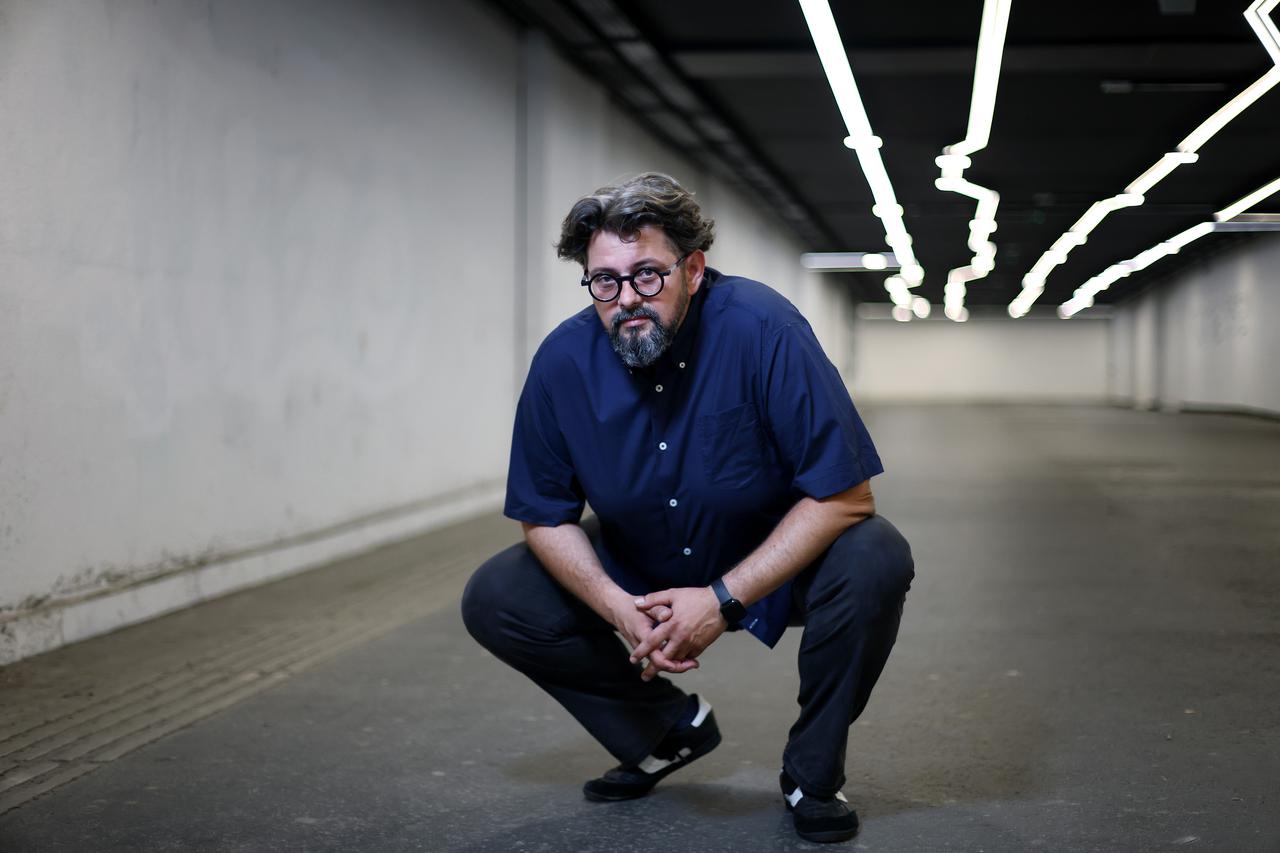
Author: Robert Bubalo
Photo: Boris Ščitar/Pixsell
Robert Zuber, journalist, documentary filmmaker and director of the Rab Film Festival, speaks ahead of its eighth edition about film, truth, journalism and culture.
The eighth Rab Film Festival (RAFF), Croatia’s unique festival dedicated to investigative cinema, will take place on the island of Rab from 22 to 26 August. This year’s edition, held under the motto “Truth Needs an Audience”, brings 12 films in competition, including as many as seven Croatian premieres. Ahead of the festival, we spoke with its director, Robert Zuber, a journalist and documentary filmmaker, about whether truth can compete with lies today; why journalism has become one of RAFF’s protagonists; where artistic freedom ends and responsibility towards the people in front of the camera begins; and why culture and tourism in Croatia still too often exist as two separate worlds.
This year’s RAFF slogan is “Truth Needs an Audience.” At a time when lies, propaganda, and algorithmically generated outrage generally find an audience more easily, isn’t the biggest challenge making the truth interesting enough for people actually to want to hear it?
I think that is one of the traps of this new era, brought about by new technologies and the new trends based on them. For me personally, asking how to make something interesting first and foremost to draw viewers toward what you call the truth already represents a kind of defeat. Truth, in my humble opinion, is what it is. Any intervention motivated by the desire to make it more interesting becomes an alteration of the truth. And a form of manipulation, an adaptation to the market. In that sense, RAFF is not sufficiently adapted to the market. But I believe it has a path entirely of its own, and that audiences—at least judging by the growing interest we see year after year—are slowly turning toward it without the additional tools of “interestingness” you mention. I don’t mean that creativity in cinematic art should be eliminated when conveying the truth or telling stories. Creativity is one of the criteria we use when selecting films for our audience.
When you launched RAFF eight years ago, did you primarily envision a film festival, or a place where film would provide an opportunity to discuss society? At what point did RAFF acquire the identity it has today?
For accuracy, my wife, Silvija Jonjić Zuber, and I conceived the festival. And that was even before we discovered Rab as the place where our festival would take place. Then came that visit to Rab, to a friend who lived there at the time, when we saw this magical stone-built yet digitalised cinema, run by POU Rab and its director, Katarina Ribarić. We spoke with her immediately, the very next day, without having a fully developed concept. After that conversation, she probably sensed something in the two of us and arranged a meeting with Rab’s mayor, Nikola Grgurić. That conversation lasted a little over an hour, and the festival was born from it. Our present-day partner Zoran Kekić then joined us, and we had an idea that we worked on for some time. But the real contours of a festival of investigative cinema actually emerged from conversations with our film programme selector — who still holds that role today — film critic Vladan Petković. RAFF as it exists today, however, is the result of wishes, mistakes and successes. I think it has now found both its identity in terms of content and, I would say, its visual form. Silvia and her colleague Krešimir Đurić brought together summer, the sea and serious cinema, and through design dressed our festival in something that seems different to me. And something that suits us.
There are 12 films in competition, including seven Croatian premieres, coming from major festivals such as Cannes, Berlin, Venice and Pula. What does a film need to have for you to say: this is a RAFF film?
That question should primarily be put to the aforementioned festival selector, Vladan Petković. Recently, after our colleague Kekić asked him to explain for our website how films are selected for RAFF, he pointed out that our festival does not actually have a strictly defined selection system or formula, apart from maintaining a balance between fiction and documentary films. This makes every edition a kind of experiment. He makes the broader selection, and together we choose the final 12 films. I think Vladan is right when he says the selection combines the festival’s theme, an understanding of the Croatian and European festival landscape, and what we have learned about our audience over the years. I believe we have never fallen into the trap of underestimating our audience. That does not mean we do not cultivate it, in the sense of helping people understand what kind of festival we are. But at the same time, we listen to their reactions and try to incorporate them into the very next editions of the festival.
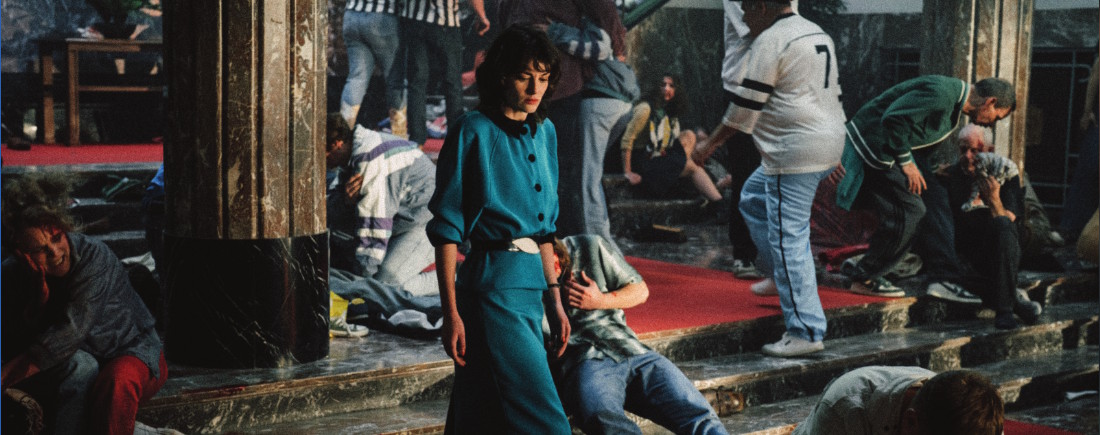
PHOTO: Heysel 85
Journalism is almost the hidden protagonist of this year’s festival. You have a film about Vjesnik, a journalist caught in the middle of the Heysel tragedy; a Lebanese journalist and a Syrian cameraman in “Birds of War”; a Swedish journalist whose expedition in “Amazomania” raises questions about the colonial gaze; and RAFF Talk, dedicated to journalism in artistic forms. Is this a coincidence or a conscious programming decision?
I’m glad you read our programme that way. Because that hidden protagonist, as you call it — journalism — is, I would say, our permanent and increasingly less hidden protagonist. There are many debates about journalism in film and in artistic forms in general. I think this is also one of the — probably rare positive — consequences of what is happening to journalism today. Not only locally, but globally. The disappearance of newsrooms, the insecurity journalists face in their work, the devaluation of the entire profession, the loss of basic respect for it… this is a terrible time for journalism. With the help of our colleague Elizabeta Gojan, our guests will also discuss this — from Zoran Kesić, Silvana Menđušić, Marko Stričević, Igor Mirković and Tena Perišin to Tomislav Levak. Technology and social media have also enabled almost everyone to feel entitled and capable of simply declaring themselves a “citizen journalist”. And they almost seem to enjoy watching the profession fall, or actively contributing to its degradation. I’m glad that film offers a kind of refuge. The project by our colleague Dražen Klarić, together with co-screenwriters Petra Balija and Boris Rašeta, is a striking example of such a refuge — one in which journalists themselves speak about the neglect of their profession. They do not remain silent. Yes, they say that the worst thing is when a journalist, or journalism itself, becomes the news. But should we therefore allow it to disappear without a whisper? Without saying a single word because doing otherwise might somehow be considered improper? I would ask patients, if technology ever made such a thing possible, whether they would want to be operated on by an educated and experienced neurosurgeon or agree to a “citizen neurosurgeon”. Does that comparison sound overly simplistic? Unfortunately, it doesn’t seem impossible to me.
“Amazomania” raises a very uncomfortable question: does a journalist or filmmaker have the right to enter other people’s lives, film their story and then take it away with them? How much has your own understanding of where an author’s right to a story ends and a person’s right not to become someone else’s “material” begins changed in recent years?
When I watched this film, that was precisely the question that troubled me. Personally, I seem to be conservative when it comes to this issue — at least that’s what my colleagues tell me. Because I don’t believe that film, or art in general, is more important than life itself, that is where I draw the line. Some colleagues believe that they have acquired an absolute artistic right once a protagonist agrees to stand in front of their camera. My conviction is the opposite. I believe this is precisely the moment my responsibility as an author begins—responsibility toward the protagonist who has placed their trust in me. And that I am merely a tool fortunate enough to possess, or to have acquired over the course of my life, a certain talent for telling other people’s stories — including theirs. That is what I tell my students as well. I firmly believe that ethics can and should exist in art, and therefore in film. A kind of deontology of the director — one that enables them to justify the trust they have been given. Many of my colleagues do not share that view. It is not for me to judge them, and I hope they will not judge me either. Instead, there should be room for discussion about this subject and, if you like, even some form of compromise. However, I remain fairly firmly convinced that I cannot base my success as an author on potentially negative consequences for my protagonists.
The film “Mariinka” was ten years in the making and follows two brothers fighting on opposite sides. Can film today speak about war without taking sides?
It is difficult, but Belgian director Pieter-Jan De Pue has shown that it is not impossible. Such an approach, however, required almost an entire decade of dedication. That is fascinating. And it shows in this film, which leaves you with the impression that you have watched an epic work. I’m glad that, with the support of the Belgian Embassy, we are also presenting the Croatian premiere of this film.
Your programme also includes “Three Weeks Later”, a film about peer violence following the suicide of a student. Where, for you, is the line between artistically confronting trauma and turning it into content designed to attract an audience?
I don’t think this film fits the formula we discussed at the beginning of this conversation, when you asked about making things interesting. I think director Miroslav Terzić, one of the creative producers, and lead actor Branislav Trifunović, along with their excellent film crew, worked with no intention of attracting an audience at all costs. It was a kind of cry—a justified one, made in the hope of shaking the audience, rather than attracting it. We deal with so many ephemeral subjects, and sometimes we fail to see what is happening in our families, our neighbourhoods, our schools. We remain silent. And most dangerously of all, we become accustomed to it. Until it happens to us. And then we are astonished when those around us do exactly what we once did. They remain silent. Hoping that the same thing will not happen to them. Does that remind you of anything? That is why it is worthwhile to watch, alongside this film, the documentary premiere “Everybody to Kenmure Street”, which speaks about the opposite: an example of solidarity as part of the civic tradition of one neighbourhood in a Scottish city.
RAFF opens this year with “Sundays”, the story of a 17-year-old girl who wants to become a nun, and closes with Zvyagintsev’s “Minotaur”, the story of a successful man whose orderly life descends into violence. Is it possible to read a kind of arc between these two films — from the search for meaning to the collapse of the world we have built for ourselves?
That is certainly one way of interpreting our programme. We believe that a festival — although the very etymology of the word suggests a kind of celebration — should not ignore the reality around us. The entire purpose of RAFF is to warn people that burying our heads in the sand will not make the reality around us disappear. That is also why this festival is a space for conversations, such as the one with Goran Navojec about the position of actors who receive no royalties, or with Luka Peroš, a member of our jury alongside Vinko Brešan and Anne Gregoret, as well as Leon Lučev, who is also joining us.
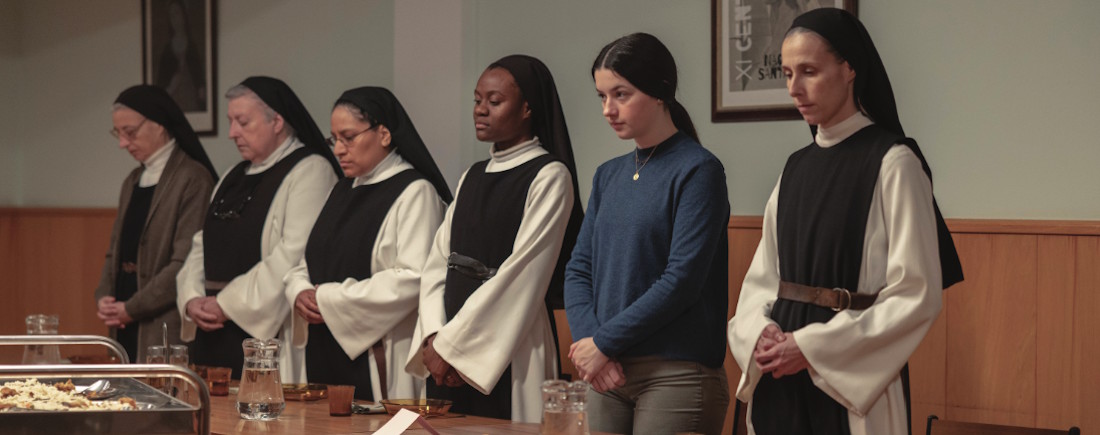
PHOTO: Sundays
Belgium is this year’s partner country, and the festival effectively begins with the Belgian “Heysel 85”, a story in which a journalist caught in the middle of a catastrophe finds himself torn between his professional duty and his own family. Why Belgium, and why this particular film as a kind of prologue to RAFF?
Three years ago, we began a cycle of cooperation with embassies. We started with Denmark, followed by the Netherlands last year. Belgium — something I’m very pleased about — came about in a way through the interest shown by the Belgian Ambassador, H.E. William De Baets. My impression is that he is a genuine film enthusiast. When we watched “Heysel 85”, we realised it had everything we were looking for — a subject that would intrigue the audience, a disaster at a football match that remains almost mythical to this day, and the story of a journalist placed in an extraordinarily difficult situation. I believe it is a very compelling title and an excellent prologue to the festival.
RAFF Generation brings together university students, while RAFF Junior is aimed at primary school children. How important is it for you to cultivate the audience of the future? Can we even talk about a crisis of cinema if we have allowed generations of children to experience film primarily on their phone screens?
We are trying. And we believe that we are sometimes overly critical of this new generation. If we have allowed this to happen, it is a matter of inertia. Of technology, of a trend that has been imposed. The real question is how we approach that generation. Last year, these kids who supposedly lack the concentration to watch anything longer than 15 seconds made an excellent five-minute film during our workshop. You should have seen their pride, and their families’, when they watched it on the big screen. We refuse to give up on that generation. We don’t want to approach them superficially. Miracles take a little effort. And that is what they expect from us as well — not to give up on them.
A festival on a tourist island in the middle of August could easily play it safe and offer audiences a lighter programme. Instead, you give them war, migration, colonialism, peer violence, worker exploitation, totalitarianism and the collapse of newspapers. Is RAFF, in some way, deliberately designed against the logic of a tourist festival?
I could answer this question at great length. And then I think: it’s a shame that such a question even has to be asked. I don’t mean that you asked it unnecessarily or incorrectly. Rather, although the premise is accurate, it’s sad that tourism and culture are seen as opposing forces. The truth is that they are. And that stems primarily from a misunderstanding of what tourism actually is and of how much culture is a part of it. What do restaurants, private accommodation or hotels base their success on? Only the sea, natural beauty, fish, gastronomy or wine? Why do we travel to Paris, Rome, London, Copenhagen or Amsterdam, where there is no such sea? Yes, there is gastronomy and wine. But there is also culture. Museums, and queues of tourists waiting to enter them.
In Croatia, we have created a cult of opposition between tourism and culture. We forget that our ancestors did not build what they built, create the traditions we inherited and develop a culture for us to present with pride — only for us, their descendants, to turn all of it into one enormous open-air restaurant. That kind of attitude towards tourism, culture and the heritage of our ancestors is not merely sad. It is shameful. RAFF is a festival that exists on Rab not merely alongside tourism. We firmly believe that it is part of the tourism offering of Rab and its people. In August. In the middle of a tourist island and at the height of the tourist season. And we are proud of that.
RAFF has survived for eight years, and you yourself have said that the seventh could have been a crisis year, while together with the City of Rab and the Public Open University Rab you gradually built a “true Rab festival”. What is more difficult today: finding money, finding good films, or finding an audience willing to spend two hours watching something that might disturb them?
Forgive me, and I hope this doesn’t sound like an advertisement for an unhealthy product: I’m a smoker. It is neither healthy nor good. But this question made me stop and light a cigarette before answering. It brings up such mixed, bittersweet feelings. Because all we need is to be allowed to work, to make films, and to have a space in which we can show them to our audience. I’m not a marketing person, and I wouldn’t dare interfere in the work of professionals. Our festival is not marketing. And I don’t believe I should be a travelling salesman whose job is to raise money. With all due respect to that honourable profession, that is not who I am. This question is connected to the previous one: what is a cultural product? How do we recognise and support it? Is it also part of tourism? And does everything have to be based solely on popular entertainment, underestimating the audience and preparing them, once they have had their swim and dinner, to head back to their rented apartments as quickly as possible, without experiencing any other content? After all, they have already spent their money. On top of all this, support for culture or cultural events such as this one is increasingly undervalued. It is gradually disappearing. It is also subject to political change, without any continuity. That is why it matters that, throughout those eight years, you have had someone like the City of Rab and POU Rab standing behind you. That you have a general sponsor such as Valamar or Imperial Riviera, even though they are under no obligation to support you. That HAVC exists. That an institution such as the Kvarner Tourist Board considers culture part of the tourism offering. Or that there are sponsors such as Fiat, Mobis or Vivatip, who likewise have no obligation to be there. But they are. And the same is true of those who follow us in the media. This year, for example, Nova TV or you at Večernji list. Someone looking from the outside might say that you have more important things to cover. But to you, we are not irrelevant. When examples like these become the norm, I hope this question too will become a thing of the past. For now, I am not optimistic that this will happen. But the examples of support I have mentioned give us enough motivation not to give up. We are not here to beg anyone for anything. We are here to create. Not because we are forced to. Not because we have to. We have a fantastic team doing fantastic work on a small budget, and I thank them for that. Because no high-quality artistic or cultural project has ever emerged from coercion or humiliation of any kind; it emerges solely because we feel that culture. After all, we feel this festival. Our need is to share what we feel with our audience. Because if we do not share it, it loses its purpose.
Throughout your professional life, you have dealt with other people’s stories — first as a journalist and documentary filmmaker, and now as someone who chooses the stories that others will watch. After all of that, have you become more optimistic or more pessimistic about people?
I believe in that definition: people are the most wonderful and the most terrible beings on this planet. In that sense, both my optimism and my pessimism coexist. But you put it well: my role today is somewhat different from telling other people’s stories. Now, together with Vladan, I select them for our audience. In that sense, I am convinced that I am more or less irrelevant. What matters are the authors we have selected and their stories. So when it comes to pessimism or optimism, what they think is more important than what I think. The focus may eventually shift to my own opinion when a film title or subject appears on that big screen that I feel the need to tell the audience myself.


