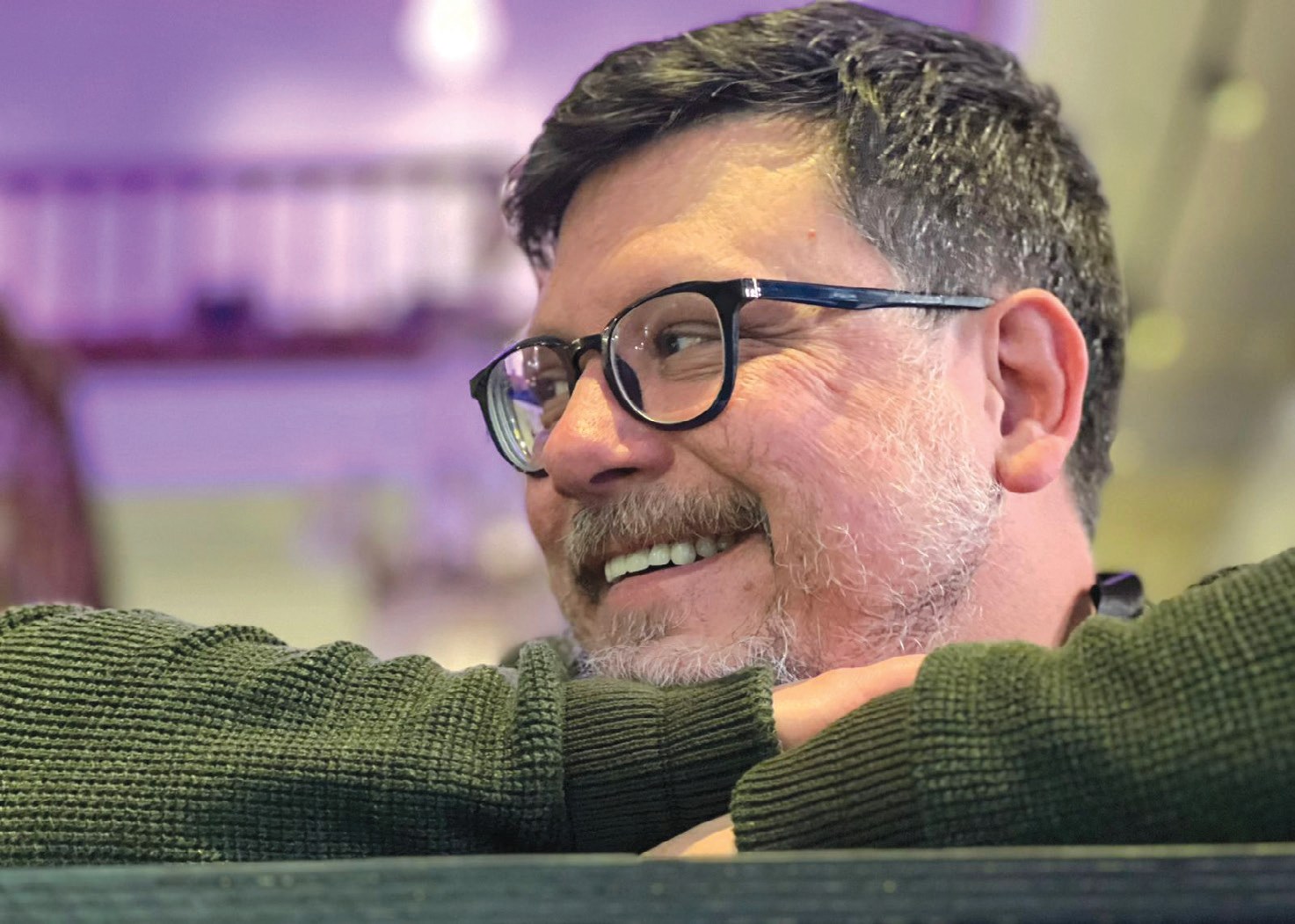
International film critic Vladan Petković, this year’s Rab Film Festival film programme selector, talks about the 12 films competing for the main award, seven of which will have their Croatian premieres. The winner will be decided by a jury consisting of director Vinko Brešan, FIPADOC director Anne Georget and actor Luka Peroš.
Text: Dubravko Jagatić
Photos: Rab Film Festival
This year, as many as seven Croatian premieres will be screened at the Rab Film Festival, and 12 films are competing for the main award. A jury of director Vinko Brešan, director of the French FIPADOC festival Anne Georget, and actor Luka Peroš will decide the winner. RAFF describes itself as a festival born from the belief that investigative film deserves a festival space of its own, and that the documentary and fiction films screened at the festival deal with subjects that demand attention: social injustice, corruption, war, propaganda, media, human rights, memory, ecology, personal freedoms and other issues that define the world we live in. We therefore asked this year’s film programme selector and respected international film critic Vladan Petković what was at the forefront of his mind when selecting films for this year’s RAFF.
“All these subjects, as well as many others, are of interest to filmmakers in both fiction and documentary form, so there is never a shortage of good films. We start with films that we believe are high-quality and interesting for our audience, while trying to strike a balance between more accessible titles, which we generally screen in prime time at the Open-Air Cinema, and more artistically interesting films aimed at cinephiles, which are therefore somewhat more challenging for the general public and are most often screened during the day at the Winter Cinema. Still, we always choose one of the latter for a prime-time slot as well, because one of the festival’s main functions is to educate and broaden our audience’s horizons. We try to attract them to titles that may nominally seem less appealing because we want the audience to grow with us and encourage them to step outside their comfort zone, just as we do. One such film is ‘At Home’, an exceptionally intriguing and intellectually provocative Hungarian thriller, a metaphor for totalitarian societies, which may sound somewhat unusual on paper, but through masterful direction and outstanding acting simply draws the viewer into its world.”
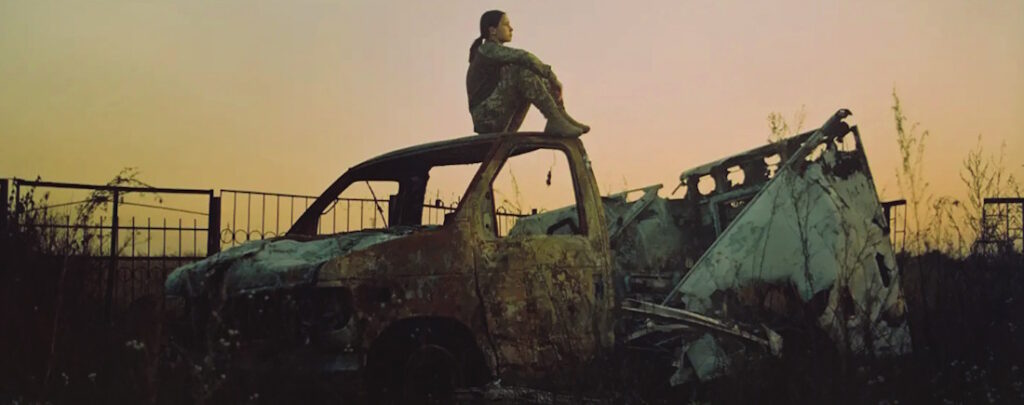
Eight documentaries will also be screened, including the harrowing Ukrainian film ‘Mariinka’.
He also stressed that they do not approach the programme with predetermined themes, but are guided by the films available. Of course, since this is a festival on an island, they always want to screen a “sea” film as well, which this year is the Spanish thriller ‘Tigers’.
“Naturally, current events inspire filmmakers, so films dealing with the war in Ukraine and the situation in Russia are unavoidable, such as the masterful documentary ‘Mariinka’ and perhaps the best fiction film of the year, ‘Minotaur’, winner of the Grand Prix at Cannes, as are those exploring the long-running crisis in the Middle East, such as the surprisingly emotional and warm documentary ‘Birds of War’, or civic resistance to xenophobic government policies, as in the exceptionally creative and inspiring Scottish documentary ‘Everybody to Kenmure Street’.”
Still, one subject always stands out, primarily because of the quality of the films dealing with it. Petković stressed that they are very pleased that this year it is young people and their position in society:
“The media constantly warn about the alienation of young people, which is largely the result of the dominance of social media, but I would say, perhaps even more importantly, of their parents being burdened by existential concerns. That is why we are opening the festival with the Spanish film ‘Sundays’, in which, through an unexpected but very logical plot development, the daughter of liberal parents wants to become a nun. At the other end of the spectrum of this theme, we have what is certainly the most artistically successful regional fiction film of the year, ‘Three Weeks After’, a Serbian-Croatian co-production directed by Miroslav Terzić, about peer violence among teenagers. Following its world premiere in the main competition of the A-list festival in Karlovy Vary, the film deservedly won awards for Best Director, Screenplay and Editing in the minority co-production competition in Pula, and received the highest critics’ rating of all films screened there. We strongly believe that young people are the most important subject in today’s world because older generations have shown that, due to apathy and the burden of everyday problems, they are unable to deal with negative trends in society. We are leaving this world to young people and need to give them a chance to turn things around. That is why it is important for us to screen films about them: to bring their problems, needs and wishes closer to older audiences, but also so that young people themselves can see people like them in realistic situations.”
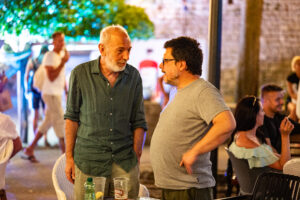 “We wanted to screen films dealing with young people, and that was our guiding thread,” says Petković.
Belgrade-based journalist and film critic Vladan Petković is a frequent film festival selector, as well as a translator and educator. He is the former Yugoslavia correspondent for Screen International and Cineuropa and regularly writes news, reviews, interviews and market analyses for various magazines and online publications. He has served as a selector for Cinema City in Novi Sad, Skopje Film Festival and FeKK in Ljubljana. As a guest selector and consultant, he collaborates with numerous international film festivals across Europe. Petković runs GoCritic!, a recently launched educational programme for future film journalists and critics, carried out in cooperation with Cineuropa.
This year RAFF presents seven Croatian premieres, including the Belgian film ‘Heysel 85’, described as a football thriller about the tragedy in which a brutal clash between hooligans resulted in 39 deaths and numerous injuries. Petković considers ‘Heysel 85’ an exceptionally successful reconstruction of the events behind the scenes, showing how neglect and lack of interest on the part of the state, as well as a series of mistakes by those responsible for security, led to the tragedy. We asked him to what extent such a film can contribute to raising society’s awareness of violence among football supporters.
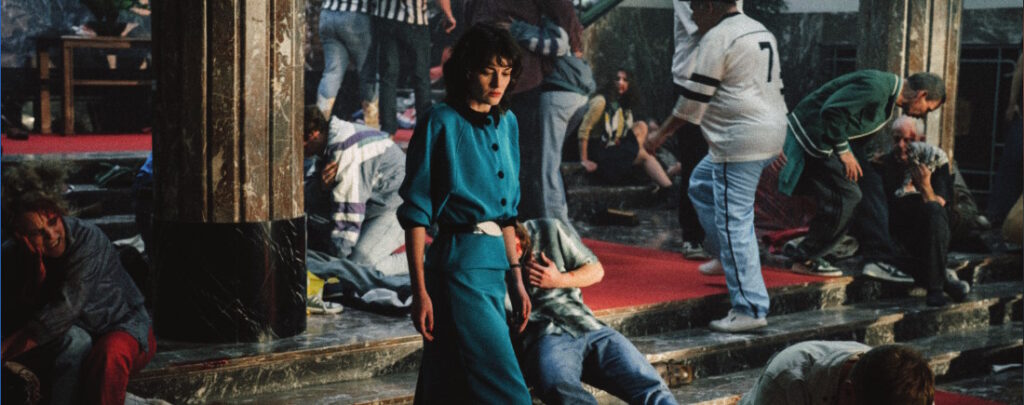
“The fiction film ‘Heysel 85’ reconstructs the events behind the scenes. It is an extraordinary example of how a well-organised state deals with violent football supporters.”
“I honestly think society is very aware of this issue, which is highly present in both traditional and social media. The problem is that the state does nothing, or very little, about it. ‘Heysel 85’ is an exceptionally successful reconstruction of the events behind the scenes. In reality, the Heysel case is an extraordinary example of how a well-organised and responsible state such as the United Kingdom deals with violent supporters: after the tragedy, Prime Minister Thatcher’s government introduced strict controls, travel restrictions and serious financial and prison penalties for such offenders, and the situation changed within a few years. English supporters are now among the most disciplined. Heysel, together with the Hillsborough tragedy five years later, also led to the standardisation of football stadium safety, which eventually reached our part of Europe as well. So that is the lesson we can draw from this film: society cannot solve such problems; they are entirely the responsibility of the state.”
‘Heysel 85’ is also one of two Belgian productions in the programme, as the Kingdom of Belgium is this year’s RAFF partner country – a choice that was not made by chance.
“That too is the result of following trends and developments in the film industry and the arts, but also of the natural course of our activities, which include frequent visits to various international festivals,” Petković said, explaining: “That is how we establish contacts and how collaborations like this develop organically. Of course, we are mindful of the fact that few festivals in Croatia, and ours in particular, can be organised solely through public funding and sponsors. We need the support of foreign embassies and organisations working in film and culture. This year, that also coincided with two films we very much wanted to screen – ‘Mariinka’ and ‘Heysel 85’, both of exceptional artistic quality and dealing with highly topical subjects.”
Given Petković’s reputation, we asked what he thought of Igor Jelinović’s ‘Koke’, which won four Golden Arenas at this year’s Pula Film Festival and will also be screened at this year’s Rab Film Festival.
“It is one of the best debut films in the recent history of Croatian cinema. Such a vivid and truthful film is actually rare even in the broader context of the regional, and indeed European, industry. Working with a fantastic cast, Jelinović has captured with almost unbelievable precision that distinctive Dalmatian mentality and the subject of material inheritance, but also the intangible, emotional inheritance within a family – something that is very present and always relevant in Croatian society, and beyond. It is not necessarily a cheerful or optimistic film, but it genuinely leaves the viewer feeling fulfilled and joyful because it is impossible not to identify with these characters and their problems.”
This year, 12 films will be screened in competition and eight out of competition, so we asked him whether there were any other films he would particularly single out.
“Besides the films I have already mentioned, I would draw readers’ attention to ‘Amazomania’, an outstanding documentary dealing with colonial legacy and ownership of one’s own culture through many layered ethical questions, while being as exciting as an adventure film Spielberg might make. Srđan Kovačević’s excellent ‘What Is to Be Done?’ is also included, about workers’ rights, and is extremely topical and fantastically researched. Among the more entertaining and lighter titles, we have the humorous detective documentary ‘Zlatan’s Nose’, in which the nose is stolen from the statue of Zlatan Ibrahimović in Malmö, and at Kino Murnau, ‘Yugo Goes to America’, a Serbian-Croatian co-production in which the filmmakers explore the history of this Yugoslav car in the United States. Finally, in cooperation with the Dok’n’Ritam festival from Belgrade, we are screening the Montenegrin film ‘Avalanche Man’, about legendary drummer Dragoljub Đuričić, who also led the student protests in Serbia in 1996/97. Naturally, this too is a topical subject given the current protests, about which a sufficiently good film has still not been made. But as we know that history repeats itself – and on the regional political scene, particularly in Serbia, this is in fact a terrible continuity stretching from the 1990s to the present – this is an exceptionally relevant documentary.”

“Among the more entertaining titles, we have the humorous detective documentary ‘Zlatan’s Nose’, in which the nose is stolen from the statue of Zlatan Ibrahimović in Malmö.”
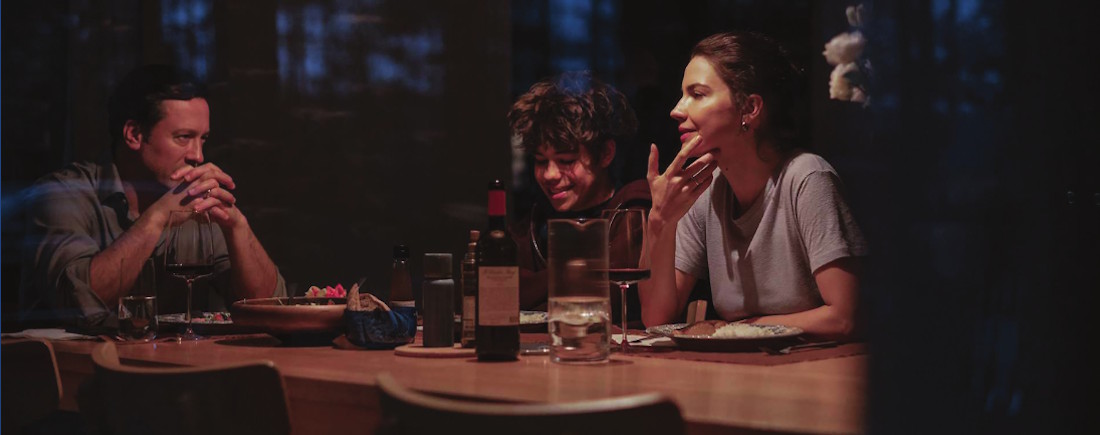
Audiences will also have the opportunity to see ‘Minotaur’, screened at the latest Cannes Film Festival.
The premiere of ‘Vjesnik – The Final Edition’ also deserves special mention. The film is by Večernji list editor-in-chief Dražen Klarić, who directed it and co-wrote the screenplay with Petra Balija, joined by well-known journalist and author Boris Rašeta as co-screenwriter. The film is described as a deep, emotional and analytical story about one period, two countries and two completely different political systems, giving a voice to those who lived, worked and helped shape that era. Here is what RAFF director Robert Tomić Zuber said about ‘Vjesnik – The Final Edition’:

“Above all, this film is a document of its time, and that is the prism through which we viewed its value. As well as the fact that its world premiere will take place precisely at a festival of investigative film such as ours. What our colleagues Dražen Klarić, Petra Balija and Boris Rašeta have made is, first and foremost, an act of responsibility towards journalism and towards the memory of a profession that existed in other times as well – a profession that knew how to do great things in difficult political circumstances. That is why parts of this documentary are also sad to watch. You are watching something that took decades to build disappear with such ease. On the other hand, the film is also a loud warning: a warning about the possibility of losing not just one newsroom, but an entire profession, if we as a society treat it with the same carelessness. For all these reasons, we are pleased that its world premiere will take place at RAFF.”
As part of the accompanying RAFF Talk programme, discussions will be held on journalism in artistic and acting professions, featuring, among others, Dražen Klarić, Silvana Menđušić, Zoran Kesić, Goran Navojec, Luka Peroš, Tena Perišin, Marko Stričević and Igor Mirković. Journalist Elizabeta Gojan will moderate the talks. At RAFF Generation, the educational programme for students, experiences will be shared by journalist Barbara Štrbac, Đelo Hadžiselimović, Danish film critic Tue Steen Müller, Belgian producer and distributor Thierry Detaille – who are also mentors in RAFF Residency, the programme for directors and producers carried out in cooperation with ZagrebDox, and Anne Georget, director of the acclaimed French documentary film festival FIPADOC.


