Sunday Večernji list, August 17, 2025
interviewed by Tia Špero
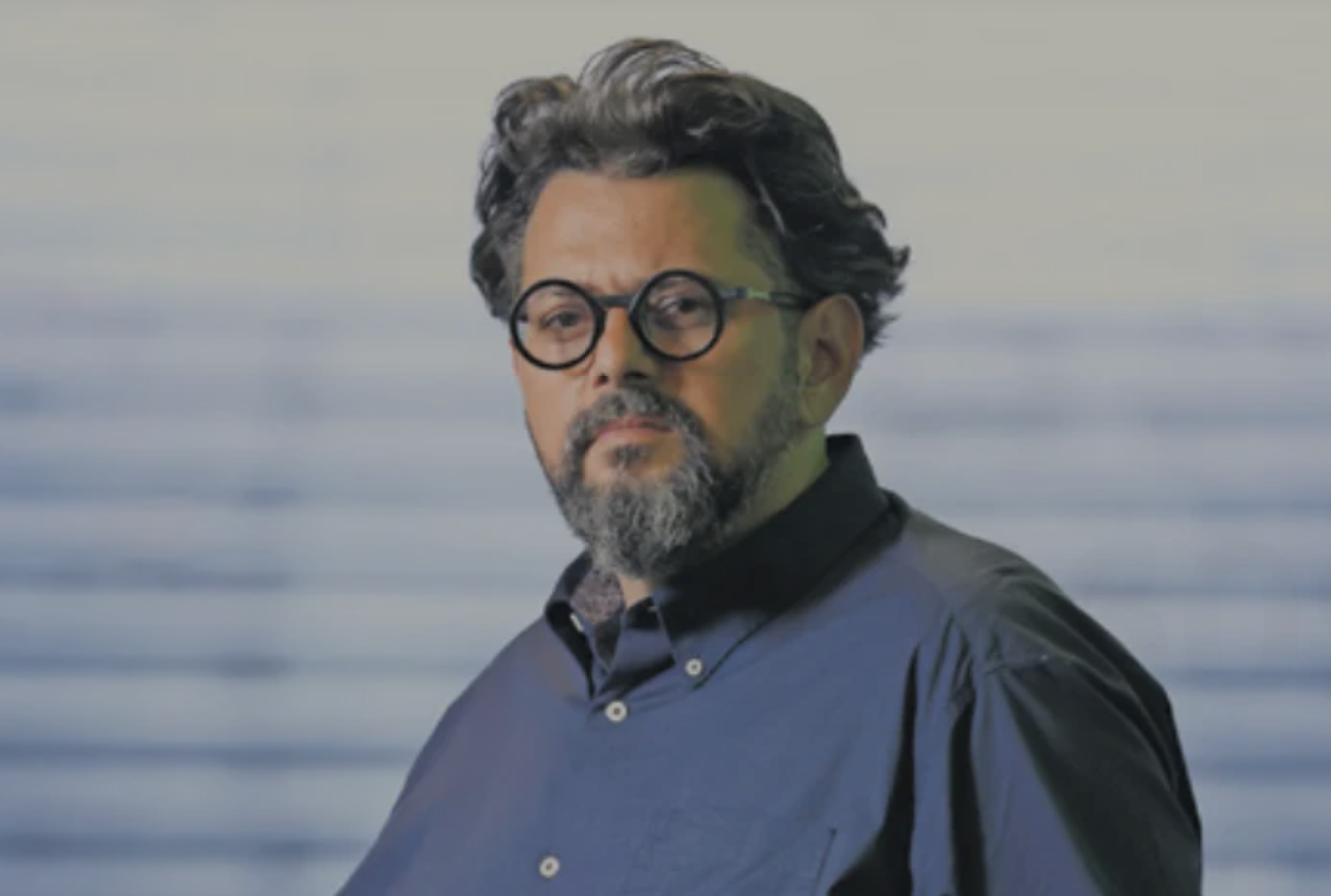
photo by Boris Ščitar/Pixsell
Although the rule is often repeated that the seventh year of every relationship is cursed – or at least critical (“The Seven Year Itch”!), this is certainly not the case with the Rab Film Festival and its seventh edition, which will be held this year from August 23 to 27. Moreover, the RAFF team calls this year the lucky seventh year. And since for the sixth year now, the task of the signatory of these lines is to announce their program in conversation with Robert Zuber, the founder and director of this unique research film festival, we can responsibly claim that an even more interesting, larger and more lavish edition awaits us this time.
– However, we have already learned that it is simply the way it is, that we have to factor in those trips, and we also hope that guests who arrive on Rab will see how beautiful a place it is and that those trips will not bother them in the least. Over the years, we have accepted that we cannot change some things, so we have to adapt and do things differently. However, being on an island also brings us advantages others do not have, such as the unique Kaich Cinema on boats we have done at previous festival editions. The island’s uniqueness also gives our festival a certain patina, a romantic atmosphere, and something different. Watching a film with the sound of the sea is more special, the sounds of waves, boats and seagulls – says Mr. Zuber about the seventh year of the festival on the island.
The festival’s long and successful cooperation with the Town of Rab and the Rab Open University shows mutual love. While the Adriatic is devouring mass tourism, Rab is happy to enrich its tourist offer with cultural content. We asked Mr. Zuber if they had noticed some visitors coming to Rab specifically for RAFF.
“I hope that tourism in the coming years will understand that culture is also exportable
product, such as what we inherit from nature and our ancestors,” says Mr. Zuber
– I think some people come because of us, at least judging by the messages from our friends and acquaintances who tell us that they booked their vacation and accommodation on Rab just in time for the festival. As for cultural tourism, I recently read an article in a newspaper about what tourists do when it rains and how many people left Croatia this summer due to the bad weather. I believe that this has turned many tourism workers and caterers towards the fact that culture is not just an accessory, that the time has passed when we thought that all we could offer was the beach and the coast, no matter how beautiful they were. I hope that in the years to come, tourism will understand that culture is also an export product, just like what we inherit from nature and our ancestors. If we look at the places that tourists visit the most, such as Dubrovnik with its walls, Split and Diocletian’s Palace, or Pula and Vespasian’s Colosseum – and that, you won’t believe, is culture. Culture remains resilient; it doesn’t disappear, it constantly reminds us that it is not just an expense and a necessary evil. Of course. A balance needs to be found between cultural activities and what brings profit. As a festival, we are lucky because we have good partners who understand this. For example, when Valamar, our biggest sponsor, prepares an offer for its guests, it includes our festival program. Because just as a part of a reasonable offer is quality fish, so is a quality play, film or concert – explains Mr. Zuber.
However, Mr. Zuber notes, they did not “discover film to Rab” because the citizens of Rab have loved film for more than a century. Namely, on this island, perhaps the only one in the Adriatic that can boast two cinemas, the first cinema opened as many as 113 years ago. The first projector arrived in Rab in 1913 and was located on Trg Slobode, popularly known as Pjaceta, the central gathering place for RAFF visitors. And that is why the festival team will open the third cinema at this location, the Murnau Cinema, more than a hundred years later. The cinema is named after the German director F. W. Murnau, best known for the cult classic “Nosferatu”. But what does Murnau have to do with Rab?
– While researching the film history of Rab, we realised that it is richer than we could have imagined. Namely, a year after he filmed his famous horror film. Murnau filmed his first and only comedy, “The Grand Duke’s Finances”. As filming locations, he chose no less than Croatia, namely Split, Zadar and Rab. “The Grand Duke’s Finances” from 1924 is Croatia’s oldest preserved feature film of foreign production. And that silent film is about Grand Duke Ramon XX. of Abbac, the ruler of a fictional Mediterranean state, who found himself on the verge of bankruptcy, while two usurpers want to take over the island from him… We soon realised that, although “The Grand Duke’s Finances” was filmed on Rab, the people of Rab never actually had the opportunity to see the film. In Croatia, it was only shown in Zagreb, in the then Kino Balkan, which we know today as Kino Europa. Coincidentally, the first day of our festival falls exactly two weeks before the 100th anniversary of the Zagreb premiere of this film. And so we decided at this year’s RAFF not only to hold a gala screening of “The Grand Duke’s Finances”, but also to open a new festival cinema dedicated to short films in the same place, on Pjaceta, where the first Rab cinema was located, as suggested by our selector Vladan Petković – reveals Mr. Zuber.
Silent film screenings have almost always been accompanied by live music, and that will be the case on the festival’s zero day, August 22nd, when the gala screening of “The Grand Duke’s Finances” will feature musical accompaniment by the celebrated pianist and composer Matej Meštrović. The Murnau Cinema will then host short films, including “Slice of Life” and “Splashback” by young authors Luka Hrgović and Dino Julius, two films from Belgrade’s DOK’N’RITM, “Rainey” by Miloš Tasić and “Travellers” by Mirza Ajnadžić, and films by students of VERN University, along with two feature-length documentaries – “Pavilion 6” by Goran Dević and a biographical film about musician Zoran Predin, “Praslovan” by Slobodan Maksimović.
In addition, in the Cinema Rab and Open Air Cinema, RAFF brings twelve films, eight of which will have Croatian premieres. Mr. Zuber points out that it is certainly worth mentioning the French film “Private Life” by director Rebecca Zlotowski. The film about psychiatrist Lilian Steiner (the famous Jodie Foster in the lead role), who investigates the death of one of her patients, after its world premiere at Cannes, the Rab audience will have the opportunity to see it before French and American viewers. There is also the film that opened the Toronto International Film Festival, the documentary “Tata”, by Lina Vdovii and Radu Ciorniciuc, in which a journalist – Lina – who has been estranged from her abusive father for years, reveals how he has now, as a migrant worker in Italy, become a victim of exploitation and abuse. Mahdi Fleifel’s film “To A Land Unknown” is a drama about Palestinian refugees in Athens, Eleanor Mortimer’s “How Deep Is Your Love” is a documentary about a group of marine biologists fighting against the destruction of the ocean, and Eloise King’s “The Shadow Schollars” takes us to Kenya and sheds light on the university essay writing industry… And since RAFF likes to listen to the pulse of the audience and bring to the island those films that have shone at our previous festivals, the program also included several domestic successes, such as the acclaimed “Peacemaker” by Ivan Ramljak, a documentary about Josip Reihl-Kir, and the Split black comedy “South Wind” by director Ante Marin.
This year’s partner of the festival is the Kingdom of the Netherlands, so from that country comes the film “Propagandist” by Luuk Bouwman, about the rise and fall of the Nazis and the most powerful man in Dutch cinema, Jan Teunissen, and the cute animated film “Fox & Share Save The Forest”. This is part of RAFF Junior, a new educational program for children, because, as the festival’s motto says – “Truth needs audience”, the audience needs to be raised from the youngest age. And in addition to the kids having the opportunity to watch some great films, including “Bumblebee’s Summer” by Daniel Kušan and “Aisha” by Iranian director Shadi Adib, during the five days of the festival, experienced filmmakers and mentors will teach their little participants how a film is made and help them shoot their first shots!
“Journalists can easily become enemies no.1, accused of being traitors or collaborators with terrorist organizations. The current situation is truly worrying.”
The great news is that at RAFF, after ten years, we will once again have the opportunity to watch the experienced journalist Elizabeta Gojan in action, that is, enjoying herself, in a version of her popular talk show “The Queen’s Gambit” at Pjaceta, where she will host some great ladies. But that’s not all – the selected gentlemen will also get to speak in the “Bishop Sacrifice” program.
What sets the Rab Film Festival apart is its discursive program, which traditionally deals with the hot social topics. This year, the special emphasis of RAFF Talk will be on the fight against propaganda. Journalists and experts such as Zoran Kusovac, Nataša Božić, Mila Moralić, Aleksandar Trifunović, Silvana Menđušić, Žarka Radoja and many others will discuss three key topics: “Investigative journalism without a newsroom”, “Propaganda: Peril that doesn’t go away” and “The effect of truth: can facts become invisible?”. In these discussions, serious problems of journalism will be considered,
especially at times when even the recent murder of a journalist in Gaza is justified by the claim that he was in the service of a terrorist organisation.
– The current situation is truly worrying, because journalists can easily become enemies, accused of being traitors or collaborators with terrorist organisations. We are often lightly judged by our environment, called journalists or worms. However, we must also admit that journalism, due to real pressures, has deteriorated in some aspects, for which we are partly responsible. At RAFF, we are trying to open up a space to discuss such things in order to face the challenges. Our goal is to connect journalists and filmmakers, create a space for the exchange of ideas, where journalists will learn the tools of documentary filmmaking, and filmmakers the tools of journalism, and perhaps be inspired to act because, in the end, they both do the same job, telling other people’s stories – concludes Mr. Zuber.


